

JD Curriculum
A comprehensive range of optional programs and concentrations for JD students distinguishes them in the marketplace.
The first year is the centerpiece of the JD program. Students engage deeply with the core pillars of U.S. law while developing essential skills in legal analysis, writing, and research.
Required first‑year courses include:
- Legal Profession
- Civil Procedure
- Constitutional Law
- Contracts
- Criminal Law
- Property
- Torts
- Legal Analysis, Writing & Research Lab
- Legal Analysis, Writing, and Research I
- Legal Analysis, Writing, and Research II
In the second and third years, students build on the first‑year foundation through a mix of required courses, electives, and experiential learning.
Upper Level Requirements
Required courses include:
- Legal Ethics and Decision-making,
- Advanced Legal Analysis, Research & Writing
- An advanced Constitutional Law course
- A minimum of three credit hours of experiential courses
Some students may also be required to take supplemental courses based on academic standing to ensure continued progress and mastery.
Electives and Academic Pathways

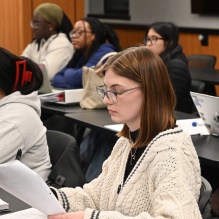
Beyond required courses, students may choose from a wide-ranging catalogue of classes that include topics such as Capital Punishment, Sports Law, Federal Income Tax, Human Rights, Environmental Law, and many more.
Students may also distinguish themselves by completing the requirements of one of our many Concentrations, which provide structured depth in a particular area of law.
Immersive Bridge Courses
Each January, the law school offers a variety of four-week, one-credit courses that may be taken by upper-level students. Known as "bridge courses”, offered between the fall and spring semesters, they are taught primarily by accomplished attorneys and judges and expose students to the realities of legal work in focused, practical ways.
Recent bridge course topics include:
- Buying and Selling Businesses
- Choosing the Right Jury
- Direct and Cross Examination of Expert Witnesses
- Federal Tax Practice and Procedure
- Intellectual Property Litigation
- Managing A Personal Injury Practice
- Professional Sports Contract Negotiation
- Sexual Harassment Mediation