Anthony Dixon

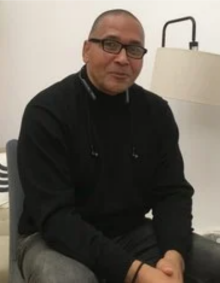
"Whether over the walls or behind them, my life can have purpose. I can impact people. "
Anthony's Story
Growing up as an only child in a single parent household, Anthony Dixon felt completely alone when he lost his mother at 18 years old. With no other family in New York, Anthony was on his own. With no one to guide him, he found himself caught up in a life on the streets.
At 21 years old, Anthony was arrested and charged with homicide, robbery, and possession of a handgun. He remembers the pivotal moment when he rejected a 15-year plea deal and chose to go to trial.
Reflecting on that decision, Anthony explained that "when you're in your early twenties, 40 seems old." However, at trial he was found guilty and sentenced to 30-years to life. The weight of such a lengthy sentence was immense. Yet, a spark of determination was kindled within Anthony as he "made up [his] mind early on that [he] was going to make sense of [his] life." Once he committed to this purpose, he immersed himself in programs designed to better himself and help others.
Seeking growth, Anthony turned to older incarcerated persons for guidance and joined a Lifers group. Through the Lifers, he learned about the history of injustices within the prison system in New York, dating back to the Attica uprisings. Seeing what previously incarcerated people had been through, Anthony felt it was incumbent upon himself to continue to advocate for better prison conditions and treatment of incarcerated people. Embracing this new perspective, Anthony worked to help younger incarcerated persons navigate the challenges of prison life while building a sense of camaraderie. He also became a leader in the Protestant church, serving as a chaplain assistant.
As Anthony continued to devote himself to his personal growth and helping others, he realized that time "started to pass me by because I had a purpose". By the time he reached the halfway point of his sentence, he marveled at how quickly those 15 years had passed and how he "became a man in prison."
Through his work Anthony realized that "whether over the walls or behind them, my life can have purpose. I can impact people. That became my guiding light... My life can still have purpose, and I can make my mother proud, no matter where I am."
Part of that purpose was making long lasting impacts. During his incarceration, Anthony developed an anti-violence program called Breaking Free from Criminal Thinking. Through this program participants are exposed to a solution-based prevention and intervention cognitive approach to crime and violence in group sessions and workshops hosted in schools, prisons, mental health units, and anti-violence treatment services. With a zero percent recidivism rate, every participant of this program has broken free from their criminal thinking. Anthony didn’t stop there. He also created a therapeutic anti-drug program called ASAP Life Areas.
Another lasting impact Anthony made came from his involvement in a class-action lawsuit against the Department of Corrections, accusing it of racial discrimination against black and Hispanic incarcerated individuals in Santiago v. Miles, 774 F. Supp. 775 (W.D.N.Y. 1991). This did not come without significant personal cost. Anthony suffered an emotional as well as physical toll as “forty officers came to assault [Anthony and six others] for being part of the lawsuit.” However, despite the backlash, the lawsuit became a landmark case in New York’s prison history after it successfully argued that significant disparities existed between white and minority incarcerated individuals as to placement in preferred housing, assignment of jobs, and the imposition of discipline, leading to changes in prison employment and disciplinary practices.
Despite over thirty years of this selfless work, Anthony's path to freedom was far from easy. After earning a Limited Credit Time Allowance for his achievements, which granted him a parole hearing six months before his first scheduled appearance, Anthony was denied parole. He would appear before the board two more times before finally being released. Each time he faced the parole board, Anthony came prepared with letters of recommendation, proof of his commitment to rehabilitation, and testimonials from correctional officers who had witnessed his transformation. However, each time Anthony went before the board, he felt as though "the board had already made a conclusion before the hearings." Only those who have repeatedly appeared before the parole board can truly know the frustration of being judged by the worst mistake of your life despite decades of growth and devotion to helping others.
Yet, each time he waited for his next chance to appear before the parole board, Anthony spent his time helping others prepare for their hearings, putting together packets advocating for their release and helping them feel confident in telling their stories. After serving 32 years in prison, Anthony was granted parole on his third appearance—an achievement he feels was made possible in large part by the support of the Parole Preparation Project.
Now the deputy director of the organization that helped him become a free man, Anthony continues to help those who are still incarcerated try to gain their freedom. Through the Parole Preparation Project, Anthony helps those who are released transition from prison to home and continues to support them for months and years after their release. Through his role, he also advocates for systemic change. He aims to raise awareness about the injustices of the prison system by writing op-eds, such as “The Murder of Robert Brooks Shines a Light on Abuse and Racism in New York Prisons”. In collaboration with other nonprofit organizations, he helped create a support group known as SOS (Survivors of the System). Emphasizing the importance of community in fostering hope and resilience, this group “meet[s] weekly to share resources, job offers, and support.”
Furthermore, Anthony is deeply involved in legislative efforts, advocating for bills that address systemic inequities within the parole system. “The Fair and Timely Bill will allow the board to evaluate individuals for who they are and who they have become, rather than seeing them as stagnant.” He believes these changes could restore hope to those currently incarcerated. He also advocates for the Elder Parole Bill which would help reduce overcrowding in prisons, particularly among elderly incarcerated individuals. Anthony underscores the urgency of reforms such as these as “one out of every three people in New York State prisons has a life sentence.” Advocating for others brings “great joy to [Anthony’s] heart and incentivizes him to do even more.” He will continue fighting for the release of others as he knows first-hand that incarcerated people have valuable skills that they could be using on the outside to help run programs and make a better community.