David Sell

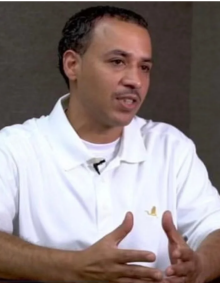
“I don’t speak for myself. I speak for those who have no voice, no way to comment, no family on the outside.”
David's Story
David grew up in an area where committing crimes was valued, and education was discouraged. Convicted at age 20 for second-degree murder, criminal possession of a weapon, and reckless endangerment, David has spent the last 27 years in prison. His first parole opportunity will not come until 2036, when he turns 66 years old. Reflecting on his own transformation, David recalled a pivotal moment: “I remember taking my GED test. My mother was so proud. Once I took the test and saw her joy, I realized I had options beyond crime. It was like a light turned on.”
After this, David began to see a whole world of opportunities. His favorite quote echoed through his mind: “An unexamined life is not worth living.” It was this sentiment that propelled him toward personal growth. He dove into various programs at Attica and Five Points, recognizing that true rehabilitation required a willingness to change. “Rehabilitation isn’t really promoted in prison,” he admitted. “You have to want to change.”
Among the programs David enrolled in, Aggressive Replacement Therapy (ART) stood out to him. Though he was not required to take it he “wanted to.” It taught him “conflict resolution and how to handle [himself] in difficult situations. In an environment that breeds aggressive energy, learning to deescalate conflict was invaluable.” His commitment to change didn’t stop there. David also participated in several skills based programs, including a Welding Program, where he excelled. “I was commended by my instructor,” he said, pride swelling in his chest. “These opportunities need to be promoted more. Many don’t even know they exist.” He believed that skills training could be a lifeline, a means of preparing for a life beyond bars.
In addition to working on self-improvement, David committed himself to helping others. David established a fatherhood program at Attica Correctional Facility. Furthermore, he actively participated in the Youth Assistance Program (YAP). YAP focuses on identifying the needs of young people who are on the brink of entering the criminal justice system. It was extremely rewarding mentoring at-risk youth who were on the verge of making the same destructive choices that David once made. However, YAP limited the extent of this mentorship, often ending when the youth still needed guidance. Thus, David worked with two fellow incarcerated individuals to establish a similar program that provided more opportunities for mentorship. They called this program “Change Comes From Within” (CCFW).

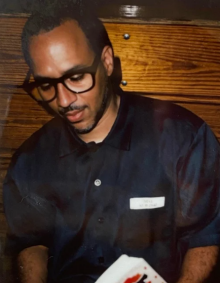
CCFW is an organization dedicated to mentoring at-risk youth and guiding them away from criminal behavior. The curriculum David co-developed focuses on preventing gun violence by pairing gang-affiliated youth with incarcerated mentors, bridging the divide between the incarcerated and the outside world. This program aims to provide young people with role models who understand the consequences of the destructive path the youth are on, helping them avoid the same pitfalls that led to their mentors’ incarceration. If David could go back in time and give himself advice, he would tell himself to “stay in school. Lack of education is destructive.” It was a lesson he learned the hard way; one he now shares with the youth he mentors through CCFW.
David's advocacy work is complemented by his published pieces in the NYU Harbinger Review for Law and Social Change, where he uses his voice to champion humanity and justice for incarcerated individuals. David’s transformation includes his advocacy work which was driven by a profound sense of responsibility. “I don’t speak for myself. I speak for those who have no voice, no way to comment, no family on the outside,” he said. David had seen firsthand how incarceration could strip individuals of their humanity, and he was determined to extend empathy and understanding to all who were locked away. His advocacy is fueled by compassion, and a foundational belief that “we need to extend humanity to incarcerated individuals.”
David is acutely aware of the challenges that surrounded him. “You see so many depressed people in prison,” he remarked. The atmosphere often felt devoid of hope, particularly after the package ban that severed connections with loved ones. David knows how vital family connections are and does all he can to maintain a strong connection to his wife, children and grandchildren. He knows firsthand that “having ties to your family really helps with rehabilitation”. To take that away is to take away hope.
David Sell’s journey is not just about his own redemption; it is about lighting the way for others. With a heart full of hope and a mind sharpened by reflection, he is committed to transforming not only his life but also the lives of his fellow incarcerated colleagues. David understood intimately that rehabilitation was not just possible; it was vital for the human spirit. David’s story highlights the urgent need for Elder Parole and Fair & Timely Parole, as his case underscores the profound injustice of being denied release before the age of 60, despite nearly three decades of transformation.