Veterans Law Practicum

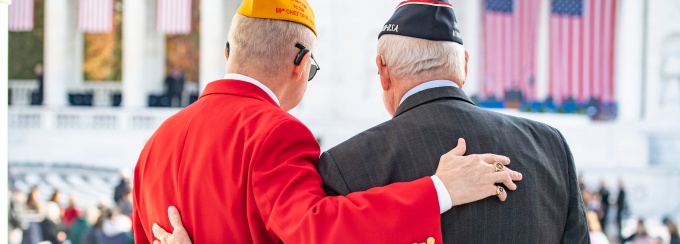
The appearance of U.S. Department of Defense (DoD) visual information does not imply or constitute DoD endorsement. Visitors attend the Veterans Day observance at Arlington National Cemetery’s Memorial Amphitheater in Arlington, Va. Credit: Elizabeth Fraser, Army.

The Veterans Law Practicum is dedicated to serving our most vulnerable veterans and their families. Our work centers on critical VA benefits that support aging, disabled, and financially insecure veterans—including veteran pension, survivor’s pension, survivor’s benefits, Dependency and Indemnity Compensation (DIC) claims, and Character of Discharge determinations for VA purposes.
Through direct client representation and advocacy, the practicum empowers veterans and their survivors to access needed benefits. At the same time, it provides law students with hands-on experience in veterans law, cultivating a new generation of attorneys committed to serving those who have served our country.


Veterans Benefits Advocacy
Our program is committed to serving our most vulnerable veterans and their families by helping them access the benefits they desperately need. We focus on delivering direct assistance and legal representation in areas critical to financial and medical stability, particularly for aging, disabled, or low-income veterans and surviving spouses.
Core Areas of Focus
We assist veterans and their families in navigating the complex VA benefits system, with particular emphasis on:
- Veterans Pension: Helping low-income wartime veterans obtain financial support for non-service-connected disabilities and long-term care needs.
- Survivor Pension: Assisting surviving spouses of wartime veterans with accessing essential financial support in times of need.
- Survivor Benefits and DIC Claims: Advocating for surviving spouses and dependents pursuing Dependency and Indemnity Compensation (DIC) and other related survivor benefits.
- Character of Discharge Determinations: Supporting veterans with less-than-honorable discharges in obtaining VA benefits through character of service determinations for VA purposes.
Claims Advocacy and Appeals
Navigating the VA system can be overwhelming, especially when claims are denied or delayed. Our team provides:
- Strategic support in gathering documentation and legal evidence.
- Legal advocacy throughout the claims and appeals process.
- Ongoing guidance to ensure that every claim is properly developed and fairly adjudicated.
Our program provides law students with the opportunity to work directly with clients under supervision, preparing the next generation of lawyers to be compassionate and effective advocates for those who have served our country.
We are committed to helping low-income wartime veterans secure veteran pension benefits—a critical source of financial support for those who are elderly or permanently and totally disabled due to non-service-connected conditions. Our team offers legal assistance and advocacy throughout the entire pension claims process, ensuring that veterans and their families receive the benefits they desperately need.
Eligibility for Veteran Pension
To qualify for veteran pension, a veteran must meet the following criteria:
- Wartime Service: The veteran must have served at least 90 days of active duty (or 24 months if service began after September 7, 1980), with at least one day during a wartime period.
- Discharge Status: The veteran must have been discharged under conditions other than dishonorable.
- Age or Disability: The veteran must be age 65 or older, or permanently and totally disabled, not due to willful misconduct.
- Financial Need: The veteran’s household income and net worth must fall within the limits established by the VA.
Application Support
We provide comprehensive support in preparing and filing pension claims, including:
- Form VA 21P-527EZ (Application for Pension) for veterans.
- Form VA 21P-8416 (Medical Expense Report), when needed to reduce countable income.
- Form VA 21-2680 (Examination for Housebound Status or Permanent Need for Aid and Attendance), when applying for special monthly pension benefits.
- Coordination of necessary medical and financial documentation to support eligibility.
Expected Processing Timeline
The VA generally takes 3 to 6 months to process a well-documented pension claim, though times may vary based on claim complexity and workload. Our team works proactively to ensure all required information is submitted promptly and accurately, helping avoid unnecessary delays.
Empowering Veterans Through Advocacy
Applying for veteran pension can be overwhelming—especially for elderly or disabled veterans navigating financial and medical challenges. We are here to provide compassionate, informed legal support every step of the way, from initial application to follow-up with the VA. Our goal is to ensure our clients achieve financial stability and access the care they need.
We assist surviving spouses of wartime veterans in obtaining VA Survivor Pension—a tax-free monthly benefit that can provide essential financial support for those facing economic hardship after the death of a veteran. Our team works closely with families to navigate the application process and ensure timely, accurate submission of all required materials.
Eligibility for Survivor Pension
To qualify for VA Survivor Pension, the applicant must meet the following criteria:
- Relationship to the Veteran: The applicant must be the unremarried surviving spouse of a deceased veteran.
- Wartime Service: The veteran must have served at least 90 days of active duty (with at least one day during a wartime period), or 24 months if service began after September 7, 1980.
- Discharge Status: The veteran must have been discharged under conditions other than dishonorable.
- Income and Net Worth Limits: The surviving spouse must meet the VA’s financial need requirements, with income and net worth below established thresholds.
- Death Circumstances: The veteran’s death does not need to be service-connected.
Application Support
We guide surviving spouses through every step of the process, assisting with:
- Form VA 21P-534EZ (Application for DIC, Death Pension, and/or Accrued Benefits)
- Form VA 21P-8416 (Medical Expense Report) to help offset countable income with out-of-pocket medical expenses
- Supporting documentation, including the veteran’s DD-214, marriage certificate, death certificate, and proof of income and assets
Expected Processing Timeline
Survivor pension claims typically take 3 to 6 months to process, depending on the VA’s workload and whether additional information is requested. We help reduce delays by submitting complete and well-documented applications and by responding promptly to any VA inquiries.
Compassionate Advocacy for Families
Applying for Survivor Pension can be especially challenging during a time of grief and financial uncertainty. Our team is committed to helping surviving spouses secure the benefits they desperately need—ensuring their loved one’s service is honored through timely and effective support.
We assist surviving spouses and dependents in applying for Dependency and Indemnity Compensation (DIC)—a tax-free monthly benefit available to families of veterans who died in the line of duty or as a result of service-connected conditions. DIC is one of the most important forms of compensation available to surviving family members, and our team is committed to guiding families through this often complex process with care and precision.
Eligibility for DIC
To be eligible for DIC, the applicant must generally meet the following criteria:
- Relationship to the Veteran: The claimant must be the surviving spouse, child, or in some cases, parent of a deceased veteran.
- Service-Connected Cause of Death: The veteran must have:
- Died while on active duty, active duty for training, or inactive duty training, or
- Died from a service-connected disability, or
- Been rated totally disabled (100%) by the VA for at least 10 years prior to death (or 5 years if the rating began immediately after discharge).
- Marital Requirements for Spouses: The surviving spouse must have been married to the veteran:
- Before January 1, 1957, or
- For at least one year, or
- For any duration if a child was born of the marriage, and
- Must not have remarried before age 57 (or before December 16, 2003, in some cases).
Application Support
We provide thorough assistance in preparing and submitting DIC claims, including:
- Form VA 21P-534EZ (Application for DIC, Death Pension, and/or Accrued Benefits)
- Form VA 21-4142/4142a (Authorization to Disclose Medical Information), when needed
- Assistance compiling death certificates, service records, VA rating decisions, medical records, and lay statements to establish eligibility
Expected Processing Timeline
The processing time for a Dependency and Indemnity Compensation (DIC) claim depends on the basis for eligibility. If the veteran was rated 100 percent service connected for at least 10 years immediately preceding death, DIC claims are often processed in approximately 10 days because no causal connection between the veteran's death and a service connected disability must be established. If entitlement depends on showing that the veteran's death was caused by or substantially contributed to by a service connected disability, the claim generally takes approximately 4 to 8 months to process, particularly if additional medical evidence or a medical opinion is required. We help families submit fully developed claims and respond promptly to VA requests to minimize delays.
Advocating with Compassion and Commitment
The loss of a loved one who served our country is deeply painful. Our role is to provide compassionate, knowledgeable support to families during this difficult time—ensuring that survivors receive the financial support they are entitled to under the law.
We assist veterans with less-than-honorable discharges in seeking Character of Discharge (COD) determinations from the U.S. Department of Veterans Affairs (VA). These determinations are often a necessary first step for accessing VA benefits—including healthcare, pension, and compensation—when a veteran’s discharge status would otherwise bar eligibility.
Our program provides veterans with informed legal support to help them overcome this critical barrier and secure the benefits they desperately need.
When a Character of Discharge Determination Is Needed
The VA requires a Character of Discharge determination when a veteran was discharged under conditions other than honorable (OTH), bad conduct, or dishonorable, and is applying for VA benefits. Even if the Department of Defense (DoD) has not upgraded the discharge, the VA has independent authority to determine whether the service was “under conditions other than dishonorable” for benefits purposes.
Common Situations That May Require a COD Determination:
- Administrative OTH discharges due to misconduct, drug use, or minor infractions
- Bad Conduct Discharges issued by a special or general court-martial
- Cases involving mental health conditions, traumatic brain injury (TBI), or post-traumatic stress disorder (PTSD) related to service
How We Help
We work with veterans to prepare strong, evidence-based requests for favorable VA COD determinations. Our services include:
- Form VA 21-526EZ or VA 21P-527EZ, with supporting documentation
- Collection and submission of service records, military court or NJP documents, VA and private medical records, and personal statements
- Development of arguments showing compelling circumstances that mitigate the behavior leading to discharge (e.g., undiagnosed PTSD, MST, combat stress)
- Ongoing support during the VA’s administrative review process
Expected Processing Timeline
COD determinations typically take 6 to 12 months, depending on the complexity of the case and the completeness of the application. We help ensure that each request is thoroughly documented and presented in a manner that gives the veteran the best possible chance of success.
Restoring Access to Care and Benefits
Many veterans with less-than-honorable discharges face barriers to the care and support they urgently need. Our program is dedicated to helping these veterans obtain fair consideration and restore access to VA services—recognizing that a discharge does not define the totality of their service or sacrifice.
- General articles on veterans’ legal challenges and resources
- Veterans Law Practicum delivers results across Western New York
- Prof. David Coombs expands his service to veterans in crisis
- Prof. David Coombs named Fellow of the National Institute of Military Justice
- Raising the profile of military law
- Ranking Up: A Salute to UB’s Military Law Focus