
Behind the Scenes, At the Heart of the Story
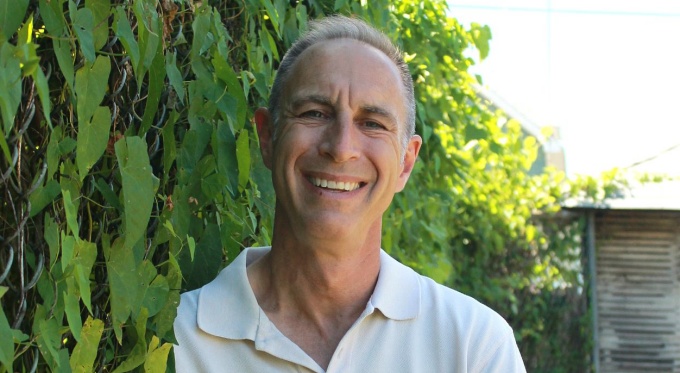
Some of the people who shape a community do so quietly—working behind the scenes, asking good questions, listening closely, and helping others tell their stories. For four decades, Scott Thomas has been one of those indispensable voices at the University at Buffalo School of Law. A freelance writer for the law school since 1985, Scott has chronicled the school’s evolution, its people, and its purpose with clarity, curiosity, and deep respect for the lived experiences behind every interview.
Hundreds of individuals connected to UB Law have spoken with Scott at some point—students, faculty, alumni, staff—each offering him a piece of their journey. He has turned those conversations into narratives that have showcased our community and preserved our history.
Now, as Scott steps into retirement after forty years of service, we sat down with him to reflect on the beginnings of his work, the stories that stayed with him, and the changes he’s witnessed along the way.
You have worked on a freelance basis for the law school since 1985. What led to that first assignment?
I was working as an editor on the Sunday magazine of The Buffalo News, and one of my tasks was to edit a home decor column that Ilene Fleischmann contributed. When Ilene was hired to oversee the law school’s communications and alumni functions, she asked me to cover some events and write occasional pieces. Astonishingly, I just kept doing it as the years flew by.
What do you remember about your first stories for the law school, and how did they set the tone for the decades that followed?
Early on I did a lot of straight reporting on events—someone gave a lecture, I took a bunch of notes and cranked out a story. Before most everything moved online, UB Law Forum was the magazine of record for the law school, so I was at O’Brian Hall a lot, trying to keep up.
From the beginning I was impressed by the school’s openness to non-traditional students and methods of scholarship, and by how many graduates went on to work in the public interest. Even as UB Law has expanded its reach into Big Law and established an international presence, that public-spirited emphasis has continued, and I think that’s commendable.
Which stories or interviews have stayed with you?
I’ve forgotten probably 90 percent of it—not enough bandwidth for everything.
But I’ve interviewed some fascinating alumni and students: the Army JAG Corps captain who helped soldiers adopt stray dogs that wandered into their post in eastern Romania and take the dogs home; a student who had served three years in prison for dealing drugs, then turned it around to become a lawyer (and wrote a memoir about the journey).
And, over the years, many faculty have shown great kindness in explaining their research interests, making them accessible to a layman like me: Rebecca French with her interest in Buddhist legal traditions, Jim Gardner on the real logic behind political campaigns, Samantha Barbas’ fascinating looks at free speech litigation and old-time Hollywood power structures, David Engel’s exploration of why wronged people often don’t sue.
Over four decades, how have you seen the law school evolve? Which changes have felt most significant from your vantage point as a storyteller?
At the law school, I’ve seen a continuing commitment to diversifying the profession, especially through the Discover Law program. I think administrators have put a lot of thought into the problem of access to justice, the question of who gets the benefit of legal representation. UB Law’s ever-expanding clinical education programs do good work toward closing that gap. It’s never enough, though, is it?
Consistent with the wider work world, the law school has gotten more sensitive to the necessity of work-life balance, both for those in school and those finding their way in the profession. And alternative dispute resolution, once an afterthought, has become a huge part of the mission.
You’ve had a rich and varied career as a newspaper copy editor, a minister and an author. What comes next?
I have a couple of writing projects going: a compilation of life advice culled from military training manuals, and noodling around with ideas for a comic novel. But retirement is for me largely a challenge to step back from the hustle and count my blessings. I highly recommend it.