OUR PAST
In Their Own Words
Oral History Project debuts
An ambitious law school initiative more than two decades in the making—one that preserves the uniqueness of generations of legal talent and leadership—is ready for its highly anticipated public debut.
The Harry A. Rachlin ’26 Oral History Project gathers the voices of hundreds of distinguished members of the UB Law community through audio and video interviews, as well as recorded remarks at high-profile events. The subjects include jurists, accomplished practitioners, and beloved faculty and administrators of the school, many of whom have since passed on.
Our collection includes videos of the following individuals:

- Professor Louis Del Cotto '51
- Ilene Fleichmann
- Hon. Julio M. Fuentes ’75
- U.S. Supreme Court Justice Ruth Bader Ginsburg
- Hon. Craig D. Hannah ’95
- New York State Gov. Kathy C. Hochul
- Hon. Barbara Howe ’80
- Professor Kenneth F. Joyce
- SUNY Distinguished Professor Virginia A. Leary
- Francis M. Letro ’79
- Margaret W. Wong ’76
- Hon. Ann T. Mikoll ’54
and many more!

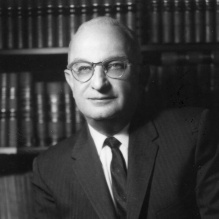
Harry A. Rachlin, Class of 1926
“We started this as a way to engage our alumni, and to preserve the memories and perspectives of previous generations, in their own voices and words, for future generations,” says Ilene Fleischmann, vice dean emerita for alumni. She began the project in 1999 in her role as executive director of the UB Law Alumni Association. “We wanted to fill in the gaps of written records, to capture people’s feelings, motivations, experiences and relationships. And we also looked at it as a way to reflect historical events from the perspective of our alumni and other leaders in the community.”
With its public launch, the project is now live on the law school’s website and will be the focus of a permanent display in the lobby of O’Brian Hall to be unveiled later this year. “Historians, scholars and the simply curious will be able to hear the voices of those they may have encountered along the way and those they might only know as legends. We have already collected close to 200 interviews and other recordings, most of which are now online,” says Fleischmann.
She notes that the project has evolved from an audio-only format to almost exclusively video. “When we first began the project, we had very limited resources, but we knew it was important to preserve these conversations. Technology has greatly improved since we began, and you can see the progression in the quality of the videos.”
Now all of the interviews are searchable by category or keyword. So, for example, if a user wants to sample everything interviewees said about corporate law or the old Eagle Street campus, the interface makes that information accessible.
Historians, scholars and the simply curious will be able to hear the voices of those they may have encountered along the way and those they might only know as legends. We have already collected 200 interviews and other recordings. - Ilene Fleischmann, vice dean emerita for alumni
Funding for the project, including hiring technical consultants, has been generously provided by the Law Alumni Association and by the late Lauren Rachlin in honor of his father, Harry A. Rachlin, Class of 1926, and his wife Jean.
Conducting the interviews has been a labor of love by dozens of alumni volunteers. They work from a list of questions, asking about upbringing, law school memories and career highlights, but often explore fascinating diversions.
“It was a wonderful opportunity to meet people who maybe you only knew as a professor and learn about their life story,” says Lynn Clarke ’83, an early member of the Oral History Committee. “There’s such a wealth of contributions from each of them. That, for me, was one of the main purposes, to highlight the contributions of these people not only to the law school but to our society and the world at large.”
So, for example, she cherishes her conversations with the late Louis Del Cotto, beloved tax professor and part-time guitarist, who led her to enjoy tax law, and the late Hon. Mary Ann Killeen ’52, the first woman in New York State to serve as a family court judge. “For women it was much more difficult back then,” Clarke says, “and it was just very interesting for me, as a woman in the law, to speak with her.”
“There’s no better way to honor a person than to record their place in the law school’s history,” says Aaron Saykin ’13, who helps interview the annual winners of the Law Alumni Association’s Distinguished Alumni Awards for the project.
“I try to have a conversation with each person,” says Saykin, a former television news journalist. “It ends up being a very personal story for many of them. How they got into law school, their law school experience, their childhood and formative years.
“You see that so many of these enormously successful and giving people hit an inflection point in their early life that started them on a trajectory to become profoundly successful. You learn how grateful they are to the law school for putting them on that path.”