
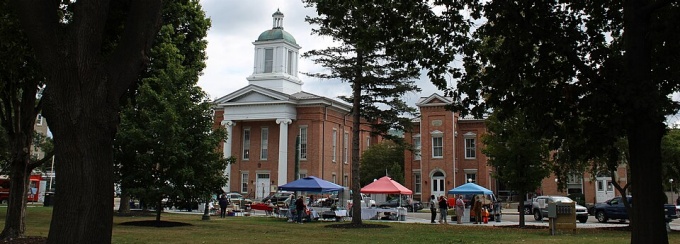
The Rural Justice Initiative
The Rural Justice Initiative addresses the critical shortage of lawyers in rural areas throughout New York State. By providing practical legal training to our law students and rural interns, the University at Buffalo School of Law promotes access to justice and innovative efforts to expand these legal services to rural counties.
The Rural Justice Initiative expands access to legal resources and representation for individuals and families living in New York’s rural communities. Through the University at Buffalo School of Law’s Access to Justice programs and partnerships with statewide pro bono networks, the initiative aims to address the unique barriers rural residents face in navigating the legal system.
By connecting volunteer attorneys, law students, and community organizations, the Rural Justice Initiative seeks to strengthen the delivery of legal services across the state—ensuring that geography is never a barrier to justice.
The University at Buffalo School of Law congratulates thirteen law students who are serving rural counties during the Summer of 2026. These law students are interning at different governmental organizations that provide services to rural communities in the 7th and 8th Judicial Districts. University at Buffalo School of Law also provides weekly trainings specifically geared towards high-need practice areas in collaboration with our faculty, staff, and volunteer attorneys.
Below are the current rural interns from the University at Buffalo School of Law along with their placements:
2026 Rural Pathways Program
- Corey Davis, Class of 2028
Otsego and Delaware Counties - Kiernan Kelley, Class of 2028
Steuben and Livingston Counties - Cameron Laney, Class of 2028
Allegheny County - Grace Phelps , Class of 2028
Oneida and Herkimer Counties - Renata Schultz, Class of 2028
St. Lawrence and Jefferson Counties - Sarah Zulewski, Class of 2028
Chautauqua and Wyoming Counties
Other Rural Interns
- Kayla Brooks, Class of 2027
Cattaraugus County District Attorney's Office - Jackson Engdahl, Class of 2028
Chautauqua County Public Defender Office - Lyddia Kasper, Class of 2028
Oneida County Public Defender's Office - Mary Lemak, Class of 2027
Schuyler County Public Defender's Office - Anthony Stefanos, Class of 2028
Genesee County District Attorney's Office - Farelle Toumani Sieyadji, Class of 2027
Livingston County Public Defender's Office - Kyle Williams, Class of 2028
Oneida County Public Defender's Office
Jake Pope '27

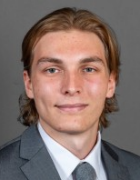
As a teenager and in his early 20s, Jake Pope ’27 worked at a local bar in Genessee County, doing everything from washing dishes to pouring drinks. He got to know the regulars, he heard their stories, and he saw how their lawyers sometimes fell short in the basics.
“In some DUI cases, the attorneys don’t always fully explain the process,” says Pope, who’s from the town of Alexander. “They’d plead it down to a traffic infraction, but their clients don’t always understand that’s not how it works for a second or third offense. It often leads to a cycle of trouble.” He saw other access to justice issues, too, such as when his friends’ parents divorced and had to travel many miles to find the right attorneys.
Now he’s planning to return to the area for a summer position with the Wyoming County Public Defender’s Office. His experience with the law school’s Criminal Justice Advocacy Clinic has further fueled his interest in public defense. And long term, he intends to settle in the area to practice. He has deep roots in the community, and the pull is hard to resist.
Not that he’d want to. “In a rural community, it’s really tight-knit and everyone knows everyone,” Pope says. “You’re representing your clients, but you’re also seeing them at the store. That’s inspiring, because you can see the direct impact you’re having on the community and I think that is important.”
Corrin Raynor '26

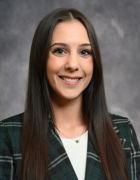
When Corrin Raynor ’26 sees the ways people in rural areas find themselves in legal trouble, she sees beyond the individual. Because, she says, people get caught up in economic and social systems that fail them—and only by addressing those larger concerns can real justice happen.
“It’s important to identify the issues people are having outside their charges,” says Raynor, who’s headed after graduation to the Broome County Public Defender’s Office in Binghamton, N.Y. “We want to be able to link them with the services they need, or get them into drug court or veterans court so their issues can be addressed.”
A criminology major as an undergraduate, Raynor has worked at the Legal Aid Bureau of Buffalo and at a small law firm in Binghamton, as well as in the law school’s Access to Justice Clinic. Ultimately, she decided public defense is her calling.
And returning to New York’s rural Southern Tier, where she grew up in small-town Owego, fits her idea of using her law degree in service to a community she already knows. “The community I grew up in and the community that raised me needs me,” she says. “I think I owe it to them to give back. Many people end up moving away because the economics or the services aren’t there. But the solution to that is not running away. The only way to fix those issues is to be present to improve them.”


Bernadette Gargano
Co-Chair of the Rural Justice Initiative Committee; Vice Dean for Experiential Education and Social Justice Initiatives; Director of Clinical Legal Education
School of Law

Hon. Michael Mohun, ret.
Co-Chair of the Rural Justice Initiative Committee; Interim Director of the Erie County Bar Association Aid to Indigent Prisoners Society, Inc.

Marc Davies
Senior Associate Director for Career Services and NYC Program in Business and Law
School of Law

Karen R. Kaczmarski
Vice Dean and Senior Director of Advancement
School of Law

Daniel Ortega
Senior Coordinator of Experiential Education;
School of Law